Field Issue Review for Gearbox Units
- Symptom Review
- Model Conditions
- Check & Communication
Diagnose the Symptom First
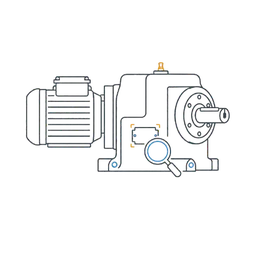
Check gears, bearings, lubrication, alignment, and loose internal parts.
Check load level, lubricant condition, oil level, ventilation, and service factor.
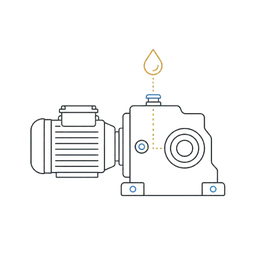
Check seals, oil level, breather position, flanges, covers, and mounting direction.
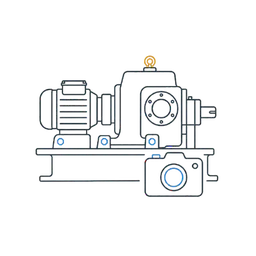
Review coupling alignment, base stability, bearing condition, load balance, and bolts.
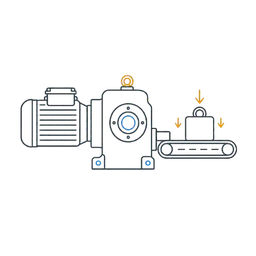
Review ratio, motor power, driven load, duty cycle, and internal wear.
Review gear wear, bearing clearance, reverse running, and impact load.
Common Symptoms
| Symptom | Possible direction | First site check | Useful files to send |
|---|---|---|---|
| Noise | Bearing wear, gear wear, low oil level, lubricant viscosity mismatch, or load change. | Check oil level, housing temperature, running hours, and whether the noise changes with load. | Short video with sound, nameplate photo, oil information, and machine photo. |
| High Temperature | Overload, poor ventilation, wrong oil, high input speed, or selected model too small for duty. | Measure temperature at the same point, record load, ambient temperature, and continuous running time. | Temperature record, motor power, ratio, application, duty cycle, and mounting position. |
| Oil Leakage | Seal wear, oil level too high, blocked breather, mounting direction issue, or contamination. | Clean the surface, run again, and confirm the exact leakage point. | Close-up photo of leakage point, full reducer photo, oil level, and mounting direction. |
| Vibration | Coupling misalignment, loose foundation, bearing wear, radial load, or driven machine issue. | Check bolts, base plate, coupling, pulley or sprocket position, and connected equipment. | Video, installation photo, shaft connection photo, and working load description. |
| Overload | Driven load jam, reducer internal resistance, wrong ratio, overload, or start-stop duty issue. | Check whether the output shaft can rotate, whether the load is blocked, and motor current trend. | Motor data, reducer model, load condition, current value, and fault time pattern. |
What to Send for Troubleshooting
How Starshine supports the next step
01.
Review the symptom
We review the visible issue and basic gearbox information to understand where the problem may start.
02.
Check the working condition
Load, speed, duty cycle, installation, connection, and environment are checked against the application.
03.
Confirm the reducer route
The case is reviewed for inspection, repair, replacement, resizing, or configuration adjustment.
04.
Connect the right support
When needed, the case is directed to the proper team for model change, dimension check, or replacement support.
Troubleshooting
Send Your Reducer Case to Starshine
- Start with photos, nameplate details, or basic working conditions.
- No complete drawing or model code is required at the first contact.
- Our team can help check repair, replacement, or adaptation possibilities.
- A practical route can be suggested based on fit, load, and application needs.