Replacement Review for Existing Gearboxes
- Failed Model Renewal
- Discontinued Replace
- Retrofit Project
replacement support
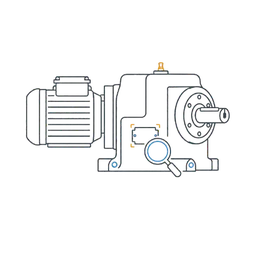
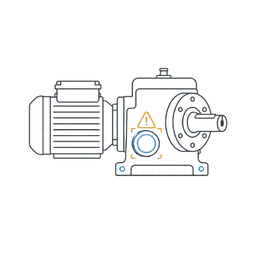
Failed gearbox
The unit is damaged, leaking, noisy or no longer stable.
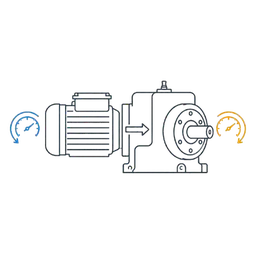
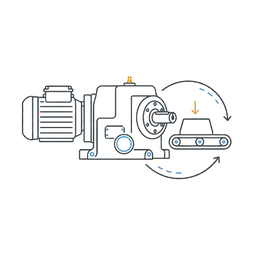
Discontinued model
The original model is no longer available.
Imported unit alternative
A local replacement is needed for cost, lead time or service reasons.
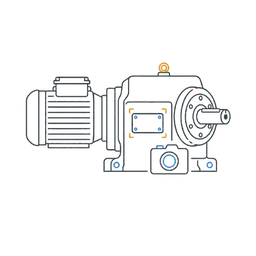
Unknown brand unit
Only photos, dimensions or application information are available.
Replacement Paths Available
Standard equivalent
A standard Starshine model is used when ratio, torque, shaft, and mounting details match closely.
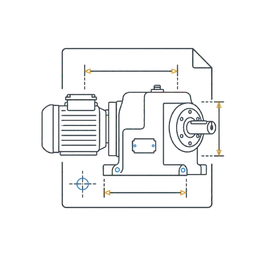
Dimensional interchange
Key dimensions are checked when the gearbox function matches but the machine interface must stay unchanged.
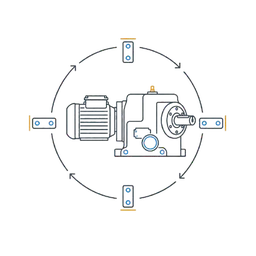
Semi-custom adaptation
Shafts, flanges, feet, input connections, or adapter plates can be adjusted when no direct match is available.
Reducer types we review
- Worm gear reducers
- Helical gear reducers
- Parallel shaft reducers
- Helical bevel gear reducers
- Planetary gearboxes
- Cycloidal reducers
- Shaft-mounted gearboxes
- Gearmotors with IEC input
- Custom and semi-custom units
What to Send for Replacement Check
What We Check
01.
Identify Replacement Needs
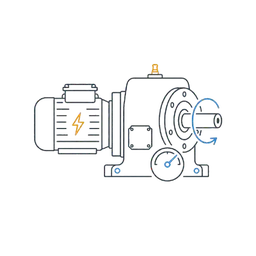
Confirm ratio, speed, torque, motor input, mounting position, shaft interface, and duty condition.
02.
Check Standard Match
Review standard Starshine models first when performance and mechanical interfaces are close.
03.
Review Adaptation Options
Assess adapter plates, shaft changes, flange adjustment, mounting feet, or semi-custom interfaces.
04.
Provide Technical Proposal
Share the recommended model, key dimensions, replacement notes, drawing reference, lead time, and quotation.
Prefer to Verify the Fit Yourself?
Replacement Check
Important notes
Replacement models require engineering confirmation. We do not publish unverified torque, ratio or dimension data for unclear models.
Direct replacement is not always possible.
A direct replacement depends on the old gearbox dimensions, ratio, torque rating, shaft interface, and installation space.
Photos and measurements improve review speed.
Clear nameplate photos, shaft dimensions, mounting photos, and machine information help reduce back-and-forth communication.
The old model may not be the right model anymore.
If the previous gearbox failed because of overload, frequent shock, poor lubrication, or changed production demand, re-selection may be safer than copying the old unit.
Adaptation can reduce machine modification.
When a standard unit does not match all dimensions, practical adaptation can help keep the existing machine layout with fewer changes.